Of reading, obviously.
I plowed through a ton of books this week/end, at least that's what it feels like.
Started Justice Sotomayor's memoir, but I was taking cold medicine for most of the last week, so I didn't want to really get into it, excited as I was to get my hands on it. So more on that later, when I really read it.
What I DID read, and is perfect for when you're not feeling great and spending a lot of time curled up in bed, was the latest Agent Pendergast book, Two Graves. It's pretty much what you'd expect - actually, it's exactly what you'd expect - but that's just fine - it's what I wanted. I will say, I give Preston & Child credit for not recapping the first two books in the trilogy (to say nothing of the entire Pendergast series), and basically just jumping into this particular story. It was schlocky, belief-stretching fun, although way over the top, of course. But who doesn't love when a Nazi hive gets blown up?
After Two Graves I continued on in the same vein with The Third Gate, by half of the same duo, in this case Lincoln Child. It was...fine? It's set at an Egyptian archaeological dig site, so maybe I was extra harsh, given my childhood love for the subject, but I felt like there were a lot of flaws. like the Preston & Child books, a LOT was crammed in - lots of different plot strands, random comments about cars and guns and machines that are maybe boy-brain-action-porn, but weren't doing it for me, and waaaay too much description of the man-made physical setting. Now, about that last maybe part of that is how I read. I generally don't "see" what's being described in my mind's eye, at least not always at the level of detail given, so when you go on and on about how the joists of a particular platform are connected, I get bored. But I think most people would have in this case.
The biggest problem was the huge twist at the end, or at least what I suppose was meant to be a huge twist, was super obvious and I saw it coming right away. Then again, I saw it coming because of clues in the text, so maybe we were supposed to get it, and then saying "you idiots! Don't you see?" to the characters would have ramped up the tension. But instead I just said "you idiots" and then was mildly annoyed when the revelation hit them, because I had been waiting for so long.
The end of the book, too, just seemed very abrupt and unsatisfying. Well, not unsatisfying, because I didn't want anything more, but not satisfying either.
Finished that yesterday, Saturday late afternoon, then started a book called The Apothecary's House (Adrian Mathews) - fine, about art stolen by the Nazis, but it was sloooooow going, so I gave it up, since I started it around 11 p.m. (stayed in last night, long story), and wanted something fast and easy.
So then I flew through another book with NO twist (although, again, when it's that obvious, is it even meant to be a twist?) and a really abrupt and in this case very unsatisfying ending, The Poison Diaries by Maryrose Wood (and inspired by, or something, the work of the Duchess of Northumberland). It's a slim YA book about a girl in eighteenth century England whose father is an herbalist who keeps a locked garden of poisonous plants and about a mysterious young man (heh, I feel cheesy just writing that, but there's no other way) - who's also hot, obviously - who comes to live with them. The main character, even the two main characters, are appealing, and there's so much room in the plot to really explore, but virtually nothing happens and what does happen is incredibly obvious.
And, maybe this is a YA thing, but much like when I watch The Vampire Diaries or Pretty Little Liars on TV, I just want to scream/scold "you stupid adolescent idiot - just TALK to him/her/them and you'll get this all figured out a million times sooner than if you run around trying to do everything on your own and secretly." I guess wisdom comes with age.
Then the end is just like "okay, and now we're done. The end." Dunno. Found myself wishing a better author had taken the same story and made an adult novel out of it.
So then it was 1:30 a.m. (I read it in under 90 minutes), and I had napped from 5:30-7 p.m., so I was awake, so I sped through Lauren Willig's The Mischief of the Mistletoe, which is just such a sweet, adorable little thing (well, almost 400 pages, so maybe not that little...but they are small pages), and then I was happy again, so I went to bed.
N.B. - looked up The Poison Diaries to the author, and it looks like it's the first in a series. So that may account for the abrupt ending.
Showing posts with label series. Show all posts
Showing posts with label series. Show all posts
Sunday, February 3, 2013

Tuesday, January 29, 2013
Bring Up the Bodies
So, the Wolf Hall sequel. Without giving anything away (mostly because C has already read this, I think), we only get to the end of Anne's reign at the end of the second book. Is Mantel going to continue writing about Thomas Cromwell, or was that it? I feel like at the end of Wolf Hall it was clear there was a next book, but not so with this one...
Anyhow, it was good. Slower going than Wolf Hall, I think, because there was a lot of "this is what you missed if you didn't read the first book" type of catch-up references (throughout, not just at the beginning), but Mantel's Cromwell is just a fascinating and appealing character, so you're willing to put up with the ponderousness here and there. And because she focuses on the details and minutiae so much, it really doesn't matter that you know how the story ends (and develops), because a lot of stuff you don't necessarily know about.
If anything, I actually like knowing the end, I think it adds a weight to the story that's very compelling. It's the same way I accidentally, but providentially, took the Roman Empire class before I took the Roman Republic class, but then was pleased. Knowing how things can go so very, very wrong can totally heighten the sense of urgency and pathos in reading back into things. I'm not expressing myself well, but - it's so heartrending to read about the Roman people forming their republic, and having such lofty aspirations, and yet knowing all the while what is coming for them - dissolute absolute rulers, civil war after civil war, the crossing of the Rubicon. Knowing that Cromwell will eventually end up being executed himself, essentially just for pissing off the king and for making enemies at court, adds another layer to watching him discredit people with the king, and have them end up dead or destroyed, and making those enemies. And the thing is, Cromwell, at least Mantel's Cromwell, knows. He's seen other people raised up and brought down, and he's done it himself, not least with Anne Boleyn. He knows he might be smarter and tougher than many of his enemies, but he also sees - and especially in Bring Up the Bodies - how easily he could fall himself, and take those he loves down with him. I just checked online, and it looks like this is the second in a planned trilogy, so I'll be curious to see if in the final book he sees his doom coming or if hubris catches him up. I hope not, for his sake, as I've grown fond of the character, and for my own, because as a reader I'd rather watch him try to fight and then learn to accept, or not.
I had been wondering where the title, Bring Up the Bodies, came from, and I was intrigued to see that it's a reference to what they said when they were fetching prisoners (in this case Anne's co-accuseds) from the Tower. Is it because, as charged traitors, they're basically presumed to be dead men walking?
Anyhow, it was good. Slower going than Wolf Hall, I think, because there was a lot of "this is what you missed if you didn't read the first book" type of catch-up references (throughout, not just at the beginning), but Mantel's Cromwell is just a fascinating and appealing character, so you're willing to put up with the ponderousness here and there. And because she focuses on the details and minutiae so much, it really doesn't matter that you know how the story ends (and develops), because a lot of stuff you don't necessarily know about.
If anything, I actually like knowing the end, I think it adds a weight to the story that's very compelling. It's the same way I accidentally, but providentially, took the Roman Empire class before I took the Roman Republic class, but then was pleased. Knowing how things can go so very, very wrong can totally heighten the sense of urgency and pathos in reading back into things. I'm not expressing myself well, but - it's so heartrending to read about the Roman people forming their republic, and having such lofty aspirations, and yet knowing all the while what is coming for them - dissolute absolute rulers, civil war after civil war, the crossing of the Rubicon. Knowing that Cromwell will eventually end up being executed himself, essentially just for pissing off the king and for making enemies at court, adds another layer to watching him discredit people with the king, and have them end up dead or destroyed, and making those enemies. And the thing is, Cromwell, at least Mantel's Cromwell, knows. He's seen other people raised up and brought down, and he's done it himself, not least with Anne Boleyn. He knows he might be smarter and tougher than many of his enemies, but he also sees - and especially in Bring Up the Bodies - how easily he could fall himself, and take those he loves down with him. I just checked online, and it looks like this is the second in a planned trilogy, so I'll be curious to see if in the final book he sees his doom coming or if hubris catches him up. I hope not, for his sake, as I've grown fond of the character, and for my own, because as a reader I'd rather watch him try to fight and then learn to accept, or not.
I had been wondering where the title, Bring Up the Bodies, came from, and I was intrigued to see that it's a reference to what they said when they were fetching prisoners (in this case Anne's co-accuseds) from the Tower. Is it because, as charged traitors, they're basically presumed to be dead men walking?
Friday, January 25, 2013
Dark Update!
I forgot I finished two books by Deanna Raybourne (or I am going to post this and realize I already wrote about them, and feel like an idiot) in her Lady Julia Grey mystery series a while ago. I read Dark Road to Darjeeling on my way down to D.C. (whoops, and, yep, suddenly this feels familiar - I seem to recall writing something like "D.C.!!! Whoo!!!" It bears repeating though, so: "DC! Whoo!!!), and started Dark Enquiry (the next in the series) in the airport on the way back. Both were fine, and passed the time, and while Lady Julia is a rather annoying character, the secondary characters have a lot of personality - especially her family - and her husband, Nicholas Bisbane, may be a super cheesy character (half gentleman, half Roma, tormented by his dark past and the gift of Sight he eschews - PUH-lease), but he does come across the page as pretty smokin' hot.
However, it wasn't until I was almost finished with the second book that I realized the reason that I was confused by the characters' chronology was that I was getting them, or at least Lady Julia, mixed up with the characters from another series!
So, in the Dark series, set in the Victorian age, Lady Julia's husband is murdered, Nicholas Brisbane is the hot guy from the wrong(ish) side of the tracks who helps her solve the mystery and then they fall in love, as and before they solve more crimes. She's young, smart, has a free mind and a great fortune. He's tall, dark, handsome and dangerous.
In Tasha Alexander's series, the Victorian Lady Emily's husband, who she doesn't know that well as it turns out, dies and she is left a young widow with a keen mind, independent spirit, and independent means. And along the way, of course, she and the "dashing" Colin Hargreaves (smart, respects smart women, not an aristocrat, kind of dangerous and wholly smokin' hot) do some crime (solving).
You can understand my confusion...
But, as I say, they're fun enough books (the Darks, I mean, but both too), and they're very good for things like airport / airplane reading. I would think if I were sick or hung over, too. Familiar but okay characters. Predictable but entertaining plots. Lots of discrete references to sex, but mainly TOTAL clothing porn.
However, it wasn't until I was almost finished with the second book that I realized the reason that I was confused by the characters' chronology was that I was getting them, or at least Lady Julia, mixed up with the characters from another series!
So, in the Dark series, set in the Victorian age, Lady Julia's husband is murdered, Nicholas Brisbane is the hot guy from the wrong(ish) side of the tracks who helps her solve the mystery and then they fall in love, as and before they solve more crimes. She's young, smart, has a free mind and a great fortune. He's tall, dark, handsome and dangerous.
In Tasha Alexander's series, the Victorian Lady Emily's husband, who she doesn't know that well as it turns out, dies and she is left a young widow with a keen mind, independent spirit, and independent means. And along the way, of course, she and the "dashing" Colin Hargreaves (smart, respects smart women, not an aristocrat, kind of dangerous and wholly smokin' hot) do some crime (solving).
You can understand my confusion...
But, as I say, they're fun enough books (the Darks, I mean, but both too), and they're very good for things like airport / airplane reading. I would think if I were sick or hung over, too. Familiar but okay characters. Predictable but entertaining plots. Lots of discrete references to sex, but mainly TOTAL clothing porn.
Growing on me...
I read Hilary Mantel's Wolf Hall when it came out (who didn't?), and I liked it well enough. Then recently I was finally edging to the front of the wait list for the sequel, Bring Up the Bodies (Bringing up the Bodies? Sh*t, you'd think I'd know since I'm reading it right now), so I checked out Wolf Hall to re-read so I'd remember what was going on in the story.
Helpful, since it's a dense story, and especially since after watching The Tudors, my view of that period, and the major players, is always going to be colored by the BBC / Showtime (not that I'm complaining; God, but I sweat Jonathan Rhys Meyers - have since I was a teenager - and Henry Cavill is not too hard on the eyes, either). Turns out that Bring Up the Bodies (or whatever - that sounds more like one of Mantel's chapter titles from Wolf Hall, so it's probably right, but Bringing sounds more like Bringing Up Baby, so obviously I love it...someone should do a screwcap [screwball + madcap = how is this not a real thing?] version of Henry VIII! Genius!) has a lot of explanatory stuff in the end, so I probably didn't need to.
But I still enjoyed it. Too much probably, because I'd curl up with it in bed and then go to sleep way too late (there were also only like, seven chapters in a huge book, so it was hard to find a natural stopping point). I didn't love the way it was written in so far as it wasn't always clear who was talking, or what was being said out loud versus thought, or who the "he" was in ever other sentence (generally Cromwell, not always), but I get that the kind of dense, occasionally crude text was a deliberate choice, and I can respect that.
Did make me wonder though, as most things about Henry VIII and his wives do - Anne always ends up coming across so badly, like a shrewish wh*re. Which, maybe she was, but there had to be more to it, no? I mean, Henry may have been king, but he was no prince. Everyone seems pretty clear that he screwed around on her. Then again, everyone seems pretty clear she did to, and possibly with her brother... I don't know. She probably was a huge raging b*tch, but when EVERYONE dumps on her, it makes me want to stick up for her, or read someone that does... I mean, was she just the Hilary Clinton that everyone got mad at because she wasn't a "nice" lady? And did crazy things like go after what she wanted and insist on being treated with the respect given to other leaders?
Anyhow, it was good, and i actually think I like it better than I did last time, which is very cool.
Helpful, since it's a dense story, and especially since after watching The Tudors, my view of that period, and the major players, is always going to be colored by the BBC / Showtime (not that I'm complaining; God, but I sweat Jonathan Rhys Meyers - have since I was a teenager - and Henry Cavill is not too hard on the eyes, either). Turns out that Bring Up the Bodies (or whatever - that sounds more like one of Mantel's chapter titles from Wolf Hall, so it's probably right, but Bringing sounds more like Bringing Up Baby, so obviously I love it...someone should do a screwcap [screwball + madcap = how is this not a real thing?] version of Henry VIII! Genius!) has a lot of explanatory stuff in the end, so I probably didn't need to.
But I still enjoyed it. Too much probably, because I'd curl up with it in bed and then go to sleep way too late (there were also only like, seven chapters in a huge book, so it was hard to find a natural stopping point). I didn't love the way it was written in so far as it wasn't always clear who was talking, or what was being said out loud versus thought, or who the "he" was in ever other sentence (generally Cromwell, not always), but I get that the kind of dense, occasionally crude text was a deliberate choice, and I can respect that.
Did make me wonder though, as most things about Henry VIII and his wives do - Anne always ends up coming across so badly, like a shrewish wh*re. Which, maybe she was, but there had to be more to it, no? I mean, Henry may have been king, but he was no prince. Everyone seems pretty clear that he screwed around on her. Then again, everyone seems pretty clear she did to, and possibly with her brother... I don't know. She probably was a huge raging b*tch, but when EVERYONE dumps on her, it makes me want to stick up for her, or read someone that does... I mean, was she just the Hilary Clinton that everyone got mad at because she wasn't a "nice" lady? And did crazy things like go after what she wanted and insist on being treated with the respect given to other leaders?
Anyhow, it was good, and i actually think I like it better than I did last time, which is very cool.
Thursday, January 17, 2013
Sometimes I make myself laugh...
At the utterly random reading I do. Case in point, the varied assortment of books that were waiting for me when I got back from my long weekend in D.C. (WHOO! Amazing as always!)
Lincoln Child, The Third Gate - I am sure I had requested this one because going on plane trips always makes me think of / want an Preston-Child (Agent Pendergast) book, and the latest one must not have been available. So I settled for a just-Child one. (Thanks for the picture, Amazon!)

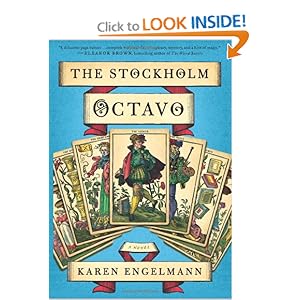
Karen Engelmann, The Stockholm Octavo - I have no idea what this book is, much less why I requested it. Times review, maybe?
Tupelo Hassman, Girlchild - this is supposed to be excellent, I am so excited.

Claire Vaye Watkins, Battleborn - I think this was something that was mentioned when I went to a talk by book review editors, and someone asked what was one of the books that they really loved this year...

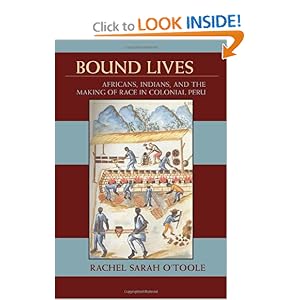
Rachel Sarah O'Toole, Bound Lives: Africans, Indians, and the Making of Race in Colonial Peru - came across this somewhere, and I just always love books on the history/complexity of racial definitions.
Hilary Mantel, Wolf Hall - this one I just want to re-read so that I'll remember the first half of the story when I finally get Bring Up the Bodies in my hands.
Jane, Duchess of Northumberland (hilarious - really??) and Colin Stimpson, illustrator, The Poison Diaries
As best I can tell, an illustrated fiction story about a poisoner, based on the research of an actual poison-gardener? It's confusing, but I can figure it out later...looks cool for now!

Lincoln Child, The Third Gate - I am sure I had requested this one because going on plane trips always makes me think of / want an Preston-Child (Agent Pendergast) book, and the latest one must not have been available. So I settled for a just-Child one. (Thanks for the picture, Amazon!)
Karen Engelmann, The Stockholm Octavo - I have no idea what this book is, much less why I requested it. Times review, maybe?
Tupelo Hassman, Girlchild - this is supposed to be excellent, I am so excited.
Claire Vaye Watkins, Battleborn - I think this was something that was mentioned when I went to a talk by book review editors, and someone asked what was one of the books that they really loved this year...
Rachel Sarah O'Toole, Bound Lives: Africans, Indians, and the Making of Race in Colonial Peru - came across this somewhere, and I just always love books on the history/complexity of racial definitions.
Hilary Mantel, Wolf Hall - this one I just want to re-read so that I'll remember the first half of the story when I finally get Bring Up the Bodies in my hands.
Jane, Duchess of Northumberland (hilarious - really??) and Colin Stimpson, illustrator, The Poison Diaries
As best I can tell, an illustrated fiction story about a poisoner, based on the research of an actual poison-gardener? It's confusing, but I can figure it out later...looks cool for now!
Subscribe to:
Comments (Atom)